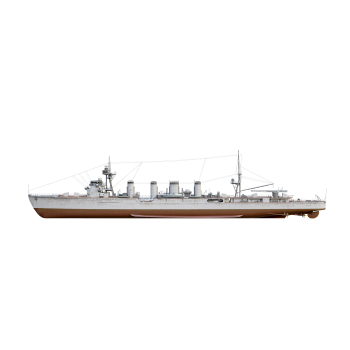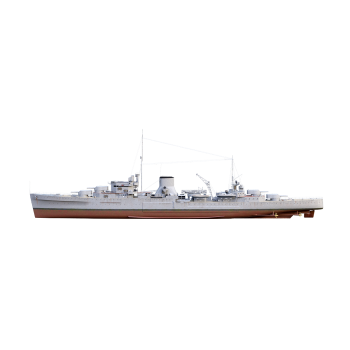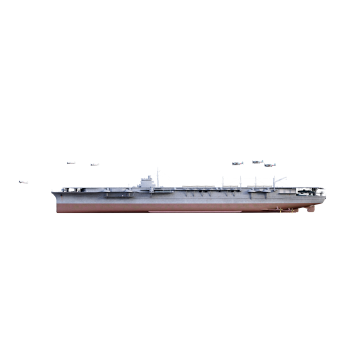

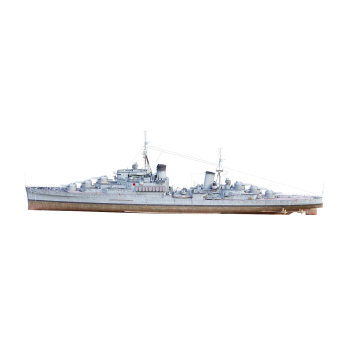
British CLAA Tier 7 MINERVA Cruiser

British CLAA Tier 7 MINERVA Cruiser

It is a light cruiser belonging to the seventh class of the British Navy. Known for its speed, agility and powerful firepower, it performs a variety of missions at sea, including reconnaissance, escort and fleet support. Equipped with advanced weapon systems and sensors, it can play a key role in modern naval warfare. MINERVA-class cruisers are designed with a focus on multi-tasking capabilities and high efficiency, allowing them to adapt to changing battlefield environments. As part of the British Navy, the MINERVA-class cruisers carry out missions around the world, protecting national interests and maintaining maritime security.
Chinese People's Liberation Army Navy Guangdong Ship Aircraft Carrier

Chinese People's Liberation Army Navy Guangdong Ship Aircraft Carrier

It is an aircraft carrier under the jurisdiction of the Chinese People's Liberation Army Navy. As an important force in the Chinese navy, the Guangdong ship represents China's development and achievements in the field of aircraft carriers. It is one of the aircraft carriers designed and built by China, which has important strategic and symbolic significance. It not only enhances the ocean-going combat capability of the Chinese navy, but also marks a new step in the modernization of the Chinese navy. Equipped with advanced weapon systems and carrier-based aircraft, it can perform tasks in a variety of complex sea conditions. As the star ship of the Chinese Navy, the Guangdong ship has demonstrated the strength and image of the Chinese Navy on many occasions at home and abroad.
German "Oswald Boerk" super aircraft carrier
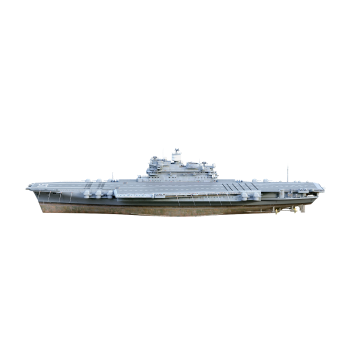
German "Oswald Boerk" super aircraft carrier

It is an aircraft carrier named after German World War I ace pilot Oswald Bolk. Built in Hamburg by the NorderwerftKoser & Meyer shipyard, it was launched in 1942 and completed in December of the same year. As an aircraft carrier, it was designed and built to represent the naval power of the German Navy during World War II. Unfortunately, it was sunk by a Russian bomber on April 8, 1945, ending its short and tragic history. Despite failing to play a significant role in the war, its name and history remain closely tied to the German Navy's aircraft carrier program.
Chinese People's Liberation Army Navy 891 Aircraft Carrier Project

Chinese People's Liberation Army Navy 891 Aircraft Carrier Project

It was a medium-sized aircraft carrier construction plan proposed by China in the late 1980 s. The project was formally established in January 1989 with the aim of developing a medium-sized aircraft carrier on China's own. The People's Navy has carried out a series of research topics around this project, including the overall structure of the ship, combat systems, steam catapults, blocking devices, and fixed-wing early warning aircraft and fighters. It is an important attempt by the Chinese Navy to build an aircraft carrier independently. Although it failed to be actually built in the end, its research results laid a solid foundation for China's subsequent aircraft carrier development projects and greatly affected the development of Chinese aircraft carriers.
Chinese People's Liberation Army Navy 707 Aircraft Carrier Project
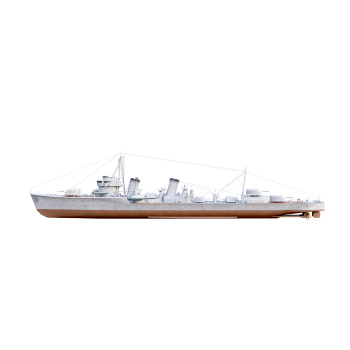
Chinese People's Liberation Army Navy 707 Aircraft Carrier Project

It is an important stage of development in the history of the Chinese navy. It was China's first attempt to develop an aircraft carrier in the 1970 s, marking the initial exploration of the Chinese Navy in the field of aircraft carriers. Designed to develop an escort aircraft carrier. However, due to the lack of relevant information and technology about aircraft carriers in China at that time, the progress of the project faced many challenges. In the end, due to technical and financial constraints, especially the lack of steam catapult technology, 707 project ultimately failed to achieve. However, the experience and lessons of 707 project have accumulated valuable experience for the development of China's subsequent aircraft carriers.
Japanese destroyer IJN Fubuki (Blowing Snow)

Japanese destroyer IJN Fubuki (Blowing Snow)

It was the first ship of the Snow-blowing class destroyer built by the Japanese Navy after World War I. A total of 24 destroyers were built, which was considered one of the most advanced destroyers in the world at that time, and was even hailed as "the world's first modern destroyer". Known for its large size, powerful engines, high speed, large range and unprecedented weaponry, its firepower is comparable to some light cruisers of other navies. Construction began on June 19, 1926, was launched on November 15, 1927, and commissioned on August 10, 1928. He played an important role in the Pacific War and participated in many battles, including the attack on Pearl Harbor.
german Z-23 destroyer

german Z-23 destroyer

It was one of 15 Type 1936A destroyers built by the German Navy during World War II. Ordered on 23 April 1938, launched on 20 September 1939 and completed on 14 September 1940. As a type 1936A destroyer, it is known for its powerful firepower. It operated primarily in Norwegian and French waters during the war, performing escort duties and occasionally engaging Allied battleships. It was sunk by the Royal Air Force on 21 August 1944, salvaged by the British in 1945 and renamed "Leopard", and finally dismantled on 7 October 1951.
Japanese cruiser IJN Sendai

Japanese cruiser IJN Sendai

It is the first ship of the Kawaguchi-class light cruiser of the Japanese Navy. It is an improvement from the previous Changliang grade, with a better boiler layout and four chimneys, while the Changliang grade has only three. Construction began on February 16, 1922 at Mitsubishi Nagasaki Shipyard, launched on October 30, 1923, and commissioned on April 29, 1924. Participated in a number of important operations during the Second World War. It was sunk by a U.S. Navy cruiser during the Battle of the Surigao Strait on November 3, 1943, which was one of the major victories of the U.S. Army against the Japanese in the Pacific War. The sinking of the Kawachi marked the end of its operations in the war.
New Zealand HMNZS Leander Cruiser

New Zealand HMNZS Leander Cruiser

Originally HMSLeander, it was a member of the Leander-class light cruiser of the British Royal Navy and later served with the Royal New Zealand Navy during the Second World War. He was commissioned into the Royal Navy on 24 March 1933 and transferred to New Zealand on 30 April 1937, becoming part of the Royal New Zealand Navy. Known for its elegant design and powerful firepower, it carried out multiple missions in the Pacific and Indian Oceans, including against Italian and Vichy French merchant ships. He returned to the Royal Navy on 27 August 1945 and was eventually sold for dismantling on 15 December 1949.
Japanese battleship IJN Fuso

Japanese battleship IJN Fuso

It is the first ship of the Japanese Navy's Fuso-class battleship and the first dreadnought ship of the Japanese Navy. Construction began on March 11, 1912 at the Wu Navy Factory, launched on March 28, 1914, and commissioned on November 8, 1915. As one of the most powerful warships in the world at the time, the Fuso and its sister ship Yamatsuyama embodied Japan's imperial ambitions in Asia. The design was influenced by the British HMSDreadnought and was the first Japanese independent design of a super dreadnought. It was sunk during the Battle of the Suriago Strait on 25 October 1944.
British battleship HMS Nelson (hull number 28)

British battleship HMS Nelson (hull number 28)

It was the first ship of the Nelson-class battleship in the Royal Navy, named after British Admiral Horatio Nelson, who won the Battle of Trafalgar. They were the first ships to be built after the Washington Naval Treaty and are therefore also known as the first treaty ships. The Nelson class was the only ship in the Royal Navy to carry three main guns, all of which were located in the bow of the ship, a design that was unusual at the time. Served in 1927. In the Second World War, participated in many important operations. Outstanding performance in the war, for the British Royal Navy combat operations provided important support.
British HMS Hood (hull number 51) battlecruiser

British HMS Hood (hull number 51) battlecruiser

It is a general-class battlecruiser of the British Royal Navy, named after the 18th century British Admiral Samuel Hood. The construction was ordered under the War Emergency Response Act of 1916. The original plan was to build four ships. However, due to the problems exposed by the design of British warships in the Battle of Jutland, the construction of subsequent ships was canceled. Only the Hood was completed, becoming the last battlecruiser of the British Royal Navy. It is one of the largest and most powerful warships in Britain and even in the world. It is known as the "Almighty Hood" and has become the symbol and pride of the Royal Navy.
Japanese IJN Takao cruiser

Japanese IJN Takao cruiser

It was the first ship of the Japanese Navy's Kaohsiung-class heavy cruiser, one of the largest and most modern cruisers in the Japanese fleet at that time. Construction began on April 28, 1927 at the Yokosuka Naval Shipyard, launched on May 12, 1930, and officially entered service on May 31, 1932. He participated in many important battles in World War II, including the Philippine landings, the Battle of Java, and two-front operations in the Aleutian Islands and Midway. After the end of the war, it surrendered to British forces on 21 September 1945 and was used as a target ship on 29 October 1946, when it was sunk by HMSNewfound.
United States USS Cleveland (CL-55) Cruiser

United States USS Cleveland (CL-55) Cruiser

The first ship of the United States Navy's Cleveland-class light cruiser, it was built during World War II. Named after the city of Cleveland, Ohio, it is the second ship to be named after this city. Construction began on July 1, 1940, was launched on November 1, 1941, and commissioned on June 15, 1942. As a new class of warship at that time, it was mainly active in the Atlantic and Pacific theaters during the war, participated in many important battles, and received 13 battle stars. It was decommissioned on 7 February 1947 and was sold for dismantling in 1960.
Japanese battlecruiser IJN Amagi

Japanese battlecruiser IJN Amagi

Originally a battlecruiser planned by the Japanese Navy, it belonged to the Tiancheng class. Due to restrictions imposed by the 1922 Washington Naval Treaty, it was planned to be converted into an aircraft carrier. Unlike the sister ship USS Chicheng (which later became the IJNAkagi aircraft carrier), the Tiancheng suffered severe damage in the Great Kanto Earthquake of 1923, resulting in a damaged keel that was ultimately beyond repair. As a result, plans to build the Sky City were canceled and it was dismantled in 1924. The Tiancheng-class plan and the fate of the Tiancheng reflected the tensions of the time between the naval arms race and treaty restrictions, as well as the unintended effects of natural disasters on military planning.
British HMS Unicorn (boat number I72) aircraft carrier

British HMS Unicorn (boat number I72) aircraft carrier

It was a light aircraft carrier and aircraft maintenance ship built for the British Royal Navy during World War II. Originally designed as a maintenance ship and light aircraft carrier, the design dates back to the first British armored aircraft carrier, the Brilliant class. The design takes into account the dual role in peacetime and wartime, and is designed to support fleet carriers far from home. It has a complete flight deck and catapults, which can carry out aircraft takeoff and landing and maintenance work. It is a unique presence in the Royal Navy. Construction began in 1939 and was completed in March 1943, but the construction process was slow due to delays and priority issues. It was eventually sold for dismantling in 1959.
United States USS Northampton (CL/CA-26) Cruiser

United States USS Northampton (CL/CA-26) Cruiser

It is the first ship of the Northampton class cruiser of the United States Navy. Originally classified as a light cruiser, it was reclassified as a heavy cruiser under the London Naval Treaty. He served in the Pacific theater during World War II and was involved in several major operations. Sailed with the USS Enterprise during the Pearl Harbor incident on December 7, 1941, and returned to Pearl Harbor the next day. In 1942, he was involved in shelling operations on Warjay Island and Wake Island, and was counterattacked by Japanese forces during operations on Wake Island on 24 February. He was honored with six battle stars in World War II.
British aircraft carrier HMS Ark Royal (hull 91)

British aircraft carrier HMS Ark Royal (hull 91)

It was an aircraft carrier of the British Royal Navy during World War II. It is known for its innovative design features such as an enclosed "hangar" deck and an "island" superstructure. Entered in 1938, it was one of the first ships of the Royal Navy designed specifically for aircraft carriers. Participated in several key operations during the war, including the Battle of Taranto and the search for the German battleship Bismarck. The design began in 1934 to improve on the limitations of existing aircraft carriers. The research led to a design with innovative blueprints, including an enclosed hangar for two deck levels, both of which are accessible via aircraft lifts.
Soviet Tashkent-class destroyer

Soviet Tashkent-class destroyer

It was a first-class destroyer built by the Italian OTO company Livorno shipyard before World War II by the Soviet Navy. Originally planned to build 10 ships, but in the end only the first ship "Tashkent" completed. The power system is a two-shaft gear steam turbine with four Yarrow boilers. Construction began in 1937 and was completed in 1939. During World War II, he participated in the siege of Odessa and Sevastopol, carried out the task of transporting supplies and personnel, and provided naval gunfire support for the Soviet army. It was sunk by Axis bombers in the harbor in 1942, after which it was salvaged and scrapped in 1944.
Japan Shokaku aircraft carrier

Japan Shokaku aircraft carrier

It was an aircraft carrier of the Japanese Navy during World War II and belonged to the first ship of the Shokuru-class aircraft carrier. Participated in many naval battles in the Pacific War, including the attack on Pearl Harbor, the Battle of the Coral Sea, and the Battle of the Santa Cruz Islands. It is famous for its Mitsubishi A6M "Zero" fighter and Nakajima B5N torpedo bomber, the latter equipped with the Type 91 torpedo. It is famous for its Mitsubishi A6M "Zero" fighter and Nakajima B5N torpedo bomber, the latter equipped with the Type 91 torpedo. The design allows it to carry 72 aircraft, plus an additional 12. It was eventually sunk by American submarines in the Battle of the Philippines.
German battlecruiser Sachnhorst

German battlecruiser Sachnhorst

It was the first ship of the Sachnhorst-class battlecruisers of the German Navy during World War II. Construction began on June 15, 1935 at the Imperial Naval Shipyard in Wilhelmshaven, launched on October 3, 1936, and commissioned on January 7, 1939. Known for its size, firepower, and speed, it is often classified as a battleship and battlecruiser. It was one of the fastest battleships of the time. The armor belt is up to 350mm thick and the deck armor is up to 50mm thick. It was sunk by the British Royal Navy during the Battle of North Point on 26 December 1943.
German KMS Gneisenau battlecruiser

German KMS Gneisenau battlecruiser

It is the No. 2 ship of the Schanhorst-class battlecruiser of the German Navy, named after the Army Marshal August von Grenesenau of the Kingdom of Prussia, and the third warship named after "Grenesenau. Construction began at the Deutsche Shipyard in Kiel in February 1934, but was rebuilt in May 1935 due to constant design modifications, which delayed construction. It was scuttled and sunk on 23 March 1945 as a blocking ship. Together with the sister ship Sachnhorst, he carried out many operations in the early stages of World War II, including a series of attacks on the British merchant fleet, and was one of the best designed German ships of the time.
British battleship HMS King George V

British battleship HMS King George V

It was the first ship of the King George V class battleship of the British Royal Navy during World War II. Construction began in January 1937 at Vickers-Armstrong's Walker Naval Shipyard, launched on February 21, 1939, and officially completed on December 11, 1940. It is known for its advanced design, powerful firepower, and important role in key naval battles, especially in the pursuit and sinking of the German battleship Bismarck. He participated in several important operations in World War II, including the sinking of the German Navy battleship Bismarck with the USS Rodney on May 27, 1941.
USS Essex

USS Essex

The first ship of the Essex-class aircraft carrier, it was built during World War II. It is the fourth warship of the U.S. Army to be named Essex, in honor of the donation of the first Essex ship to the U.S. government by residents of Essex County, Massachusetts in 1799. Construction began on April 28, 1941, was launched on July 31, 1942, and commissioned on December 31, 1942. He has participated in numerous campaigns in the Pacific theater, earning a U.S. Presidential Troop Citation and 13 Battle Stars. It was modernized after the war and returned to service in the early 1950 s. It was finally decommissioned on 30 June 1969.
1 2 3 4 5 Next